Event managers are often described as calm, chaotic, impossible to reach, and somehow aware of everything at once. If you have ever worked near a live event, you know the type: one phone in each hand, three people waiting for an answer, a radio message coming in, and a face that says something has already gone wrong but nobody else is allowed to know yet.
From the outside, that can look like madness. From the inside, it is usually a system. A very fast, very human, very pressure-tested system.
After years of working with event teams, ticketing setups, check-in flows, last-minute changes, and the strange situations that only live events can create, one thing becomes obvious: event managers are not just “organizing things.” They are constantly protecting the attendee experience from everything that could damage it.
Quick answer
An event manager coordinates people, timing, vendors, ticketing, logistics, communication, and problem-solving so the event feels smooth to attendees. The work often looks chaotic because the manager is dealing with changing information, incomplete data, last-minute requests, and operational risk in real time.
In this guide
- What event managers actually do
- Why the job looks simple from the outside
- How “precision guesswork” shapes event planning
- Why calm problem-solving matters during live events
- What event managers protect behind the scenes
- A practical checklist for better event operations
What an Event Manager Actually Does
A simple definition would say that an event manager plans, organizes, and runs an event. That is accurate, but it barely explains the job.
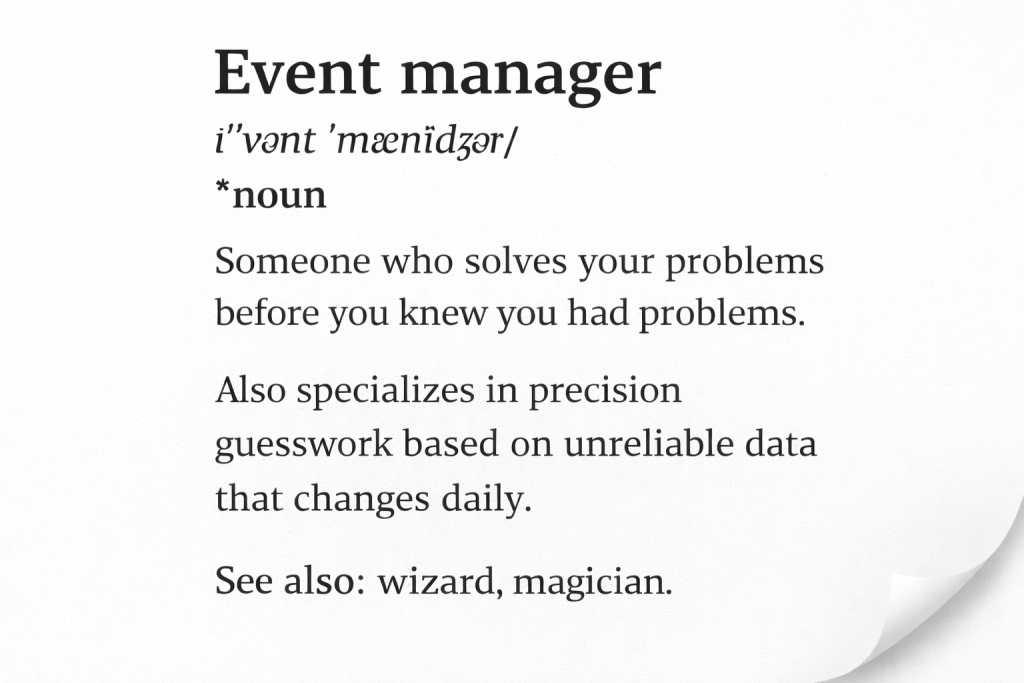
In practice, an event manager is the person responsible for making sure dozens or hundreds of moving parts behave well enough for attendees to experience one coherent event.
That includes:
- venue coordination
- ticketing setup and access rules
- staff schedules and responsibilities
- speaker, artist, or exhibitor communication
- vendor deadlines
- attendee information
- check-in flow
- on-site decisions
- emergency changes when the original plan stops matching reality
The public sees the stage, the entrance, the schedule, the sessions, and the atmosphere. The event manager sees the dependencies connecting all of it.
Why Event Management Looks Simple Until You Do It
From the outside, managing an event can look deceptively straightforward. Pick a venue, sell tickets, promote the program, open the doors.
From the inside, it feels more like building a complex structure while some of the pieces keep changing shape.
Attendance estimates move. Speakers cancel. Weather changes. Vendors miss deadlines. A room layout that looked perfect on paper suddenly creates a bottleneck. A ticket type that made sense during setup creates confusion at the door. Someone always discovers a logistical issue shortly before it becomes visible to the public.
That is the real job: not creating a perfect plan, but building a plan that can survive contact with reality.
The Hidden Work Behind a Smooth Event
Attendees rarely notice the hundreds of small decisions happening behind the scenes. They do not see the backup plans, quiet schedule adjustments, capacity checks, staff rerouting, or quick conversations that prevent confusion from spreading.
A smooth event is often the result of many almost-problems being solved early.
- A queue starts forming, so staff open another entry point.
- A speaker runs long, so the next transition gets adjusted.
- A ticket rule creates confusion, so the front-of-house team receives clearer instructions.
- A vendor is late, so the schedule changes before attendees notice.
- A check-in device fails, so a backup process takes over.
None of those moments may look dramatic. But together, they are the difference between an event that feels professional and one that feels like it is slowly coming apart.
Precision Guesswork Is Part of the Job
One of the best descriptions of event management is “precision guesswork based on unreliable data that changes daily.” It sounds like a joke because it is true.
Every event involves forecasting. How many people will arrive early? Which ticket type will sell fastest? How long will check-in take? Which session will overflow? How many staff members are enough? Where will attendees get confused?
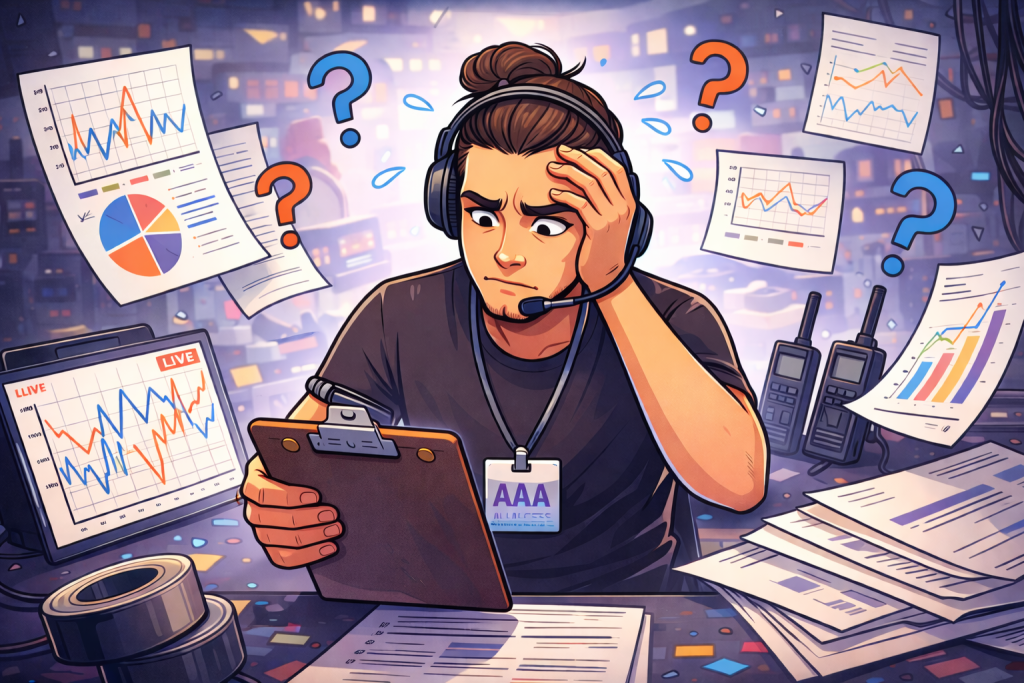
The problem is that many answers only become obvious after the event begins. Until then, event managers work with patterns, experience, ticket sales data, venue knowledge, staff feedback, and educated guesses.
Good event management is not about guessing perfectly. It is about noticing when the guess is no longer accurate and adjusting quickly.
The Real Job Description: Strategist, Problem-Solver, Magician
Event managers often joke that the job is part strategist, part problem-solver, and part magician. Watching them work, it is easy to understand why.
- A microphone stops working, and another appears.
- A queue forms where nobody expected one, and the check-in flow changes quietly.
- A schedule slips, and the next transition absorbs it.
- A VIP arrives early, and someone already knows where they need to go.
- An attendee has the wrong ticket, and staff know how to resolve it without creating a scene.
To attendees, these moments feel invisible. To event managers, they are simply the work.
A Story Every Event Manager Understands
Picture a multi-day festival with several stages. Each stage has its own manager responsible for schedule, artists, staff, security awareness, crowd flow, and the small emotional temperature changes that tell you whether everything is still under control.
The headliner is about to go on. Thousands of people are waiting. The stage manager checks backstage fifteen minutes before showtime and finds out that the artist suddenly wants fresh bananas before performing.

There is already fruit backstage. There are bananas. But those bananas are apparently unacceptable. The artist insists on fresh ones.
It is 11 PM. The show is minutes away. Negotiation is not going anywhere.
So someone gets sent on an emergency banana mission to the nearest shop that might still be open. Somehow, the bananas are found. The show starts a little late. The audience probably never learns why.
It is a ridiculous story, but every event manager has a version of it. Maybe it was not bananas. Maybe it was a missing badge printer, a delayed performer, a locked room, a broken scanner, a lost shipment, or a sponsor request nobody mentioned until the last minute.
The details change. The job remains the same: solve it fast enough that the event still feels intentional.
What Event Managers Protect
Event managers are not only protecting the schedule. They are protecting trust.
Attendees trust that their ticket will work, that the event will start reasonably on time, that staff will know what to do, and that the experience they paid for will feel organized. Sponsors trust that their investment will be represented properly. Speakers and artists trust that the environment will support their work. The internal team trusts that someone is watching the whole picture.
That is why small operational decisions matter. Ticketing, communication, check-in, capacity, access control, and staff instructions all shape how professional the event feels.
Event Management Checklist
If you manage events, use this checklist before the busy period begins.
- Define who owns each major decision area.
- Test the complete ticket purchase and check-in flow.
- Review ticket types, capacity rules, and access permissions.
- Prepare staff instructions for common attendee questions.
- Create fallback plans for check-in, payments, Wi-Fi, speakers, and schedule changes.
- Identify the issues that must be escalated immediately.
- Make sure event communication is clear before attendees arrive.
- Keep a simple channel for real-time operational updates.
- Review what happened after the event while the details are still fresh.
The checklist will not remove chaos completely. Nothing does. But it gives the team a stronger baseline when reality starts moving.
Recommended Next Read
If you are thinking about event operations, these guides connect directly to the same theme: how to prevent small issues from becoming visible attendee problems.
- Event challenges vs problems
- The myth of “we’ll fix it next year”
- How to build an event landing page that sells tickets
Final Thoughts
Event managers can look impossibly busy, slightly grumpy, and permanently surrounded by questions. That is not a personality flaw. It is often the visible part of a job built around invisible decisions.
The best event managers make chaos feel organized. They turn unreliable information into workable plans, spot problems before attendees notice them, and keep the experience moving even when the backstage reality is anything but smooth.
There is a method to the madness. Most attendees only see the method. The event manager lives inside the madness.
FAQ
What does an event manager do?
An event manager plans and coordinates the people, systems, timing, vendors, ticketing, communication, and on-site operations needed to run an event successfully.
Why is event management stressful?
It is stressful because many important details change close to the event, decisions often depend on incomplete information, and small issues can quickly affect the attendee experience.
What makes a good event manager?
A good event manager stays calm, communicates clearly, makes decisions quickly, prepares fallback plans, and knows when a small issue needs immediate escalation.
How can ticketing software help event managers?
Good ticketing software helps by making ticket sales, attendee data, capacity rules, check-in, and reporting easier to manage from one reliable system.