At some point, every event team hears the same sentence:
“It’s not a problem, it’s a challenge.”
Usually, it is said with good intentions. It keeps people calm, avoids panic, and encourages the team to look for solutions instead of blame. In live events, that mindset can be useful. But only up to a point.
The real skill is knowing when a challenge has crossed the line and become a problem that needs immediate action. That difference can decide whether your team makes a small adjustment or spends the next hour trying to recover from something attendees can already see.
Quick answer
A challenge is something your event team can absorb, adapt to, or work around without damaging the attendee experience. A problem is something that will keep getting worse unless someone acts quickly. The difference is not about language. It is about timing, impact, and operational risk.
In this guide
- Why event teams use the word “challenge”
- When that mindset helps and when it hides risk
- How small issues turn into visible attendee problems
- What experienced event managers recognize earlier
- How preparation prevents problems from reaching the public
- A practical checklist for deciding what needs action now
Why Event Teams Prefer the Word “Challenge”
Event environments are intense. There are people, vendors, systems, timelines, ticket rules, access points, sponsors, speakers, and attendees all moving at once. A calm team performs better than a panicked one, so language matters.
Calling something a challenge can help because it:
- keeps the team focused on solutions
- reduces blame during stressful moments
- prevents minor issues from becoming emotional emergencies
- encourages people to adapt instead of freeze
If a microphone cuts out for a few seconds, a presenter needs another minute, or a room change needs to be communicated quickly, “challenge” is a fair word. The team adjusts, the event continues, and most attendees never notice.
That kind of language becomes dangerous only when it delays the moment someone says: this needs to be fixed now.
When a Challenge Becomes a Problem
The word itself is not the issue. The issue is what happens when the word becomes a filter.
Once a team gets used to calling everything a challenge, it becomes easier to underreact. A slow check-in line becomes “something we are monitoring.” A confusing ticket rule becomes “a minor edge case.” A payment issue becomes “probably temporary.”
Sometimes that is true. Sometimes it is the beginning of a much bigger problem.
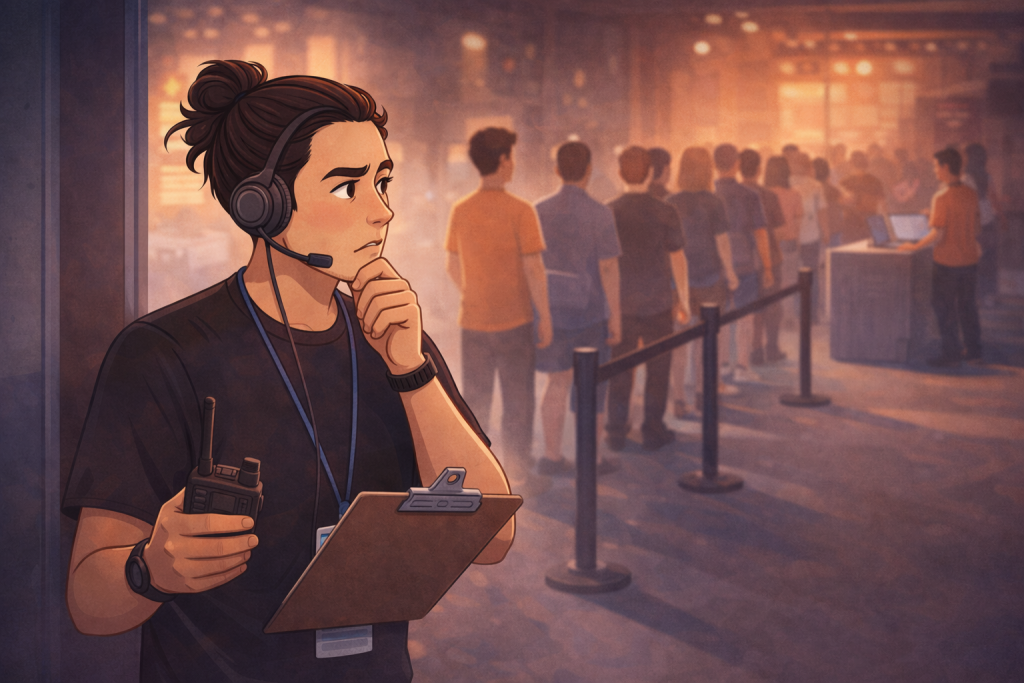
Take check-in as an example. At first, the system is only slightly slower than expected. Staff can compensate. People are still patient. It feels manageable.
Ten minutes later, the line is longer. People start checking their phones. The venue entrance gets crowded. Staff members become reactive. Now the issue is no longer internal. It has reached the attendee experience.
That is the turning point. Once the issue is visible, growing, and affecting people outside the team, it is no longer just a challenge.
The Three Questions That Separate Challenges From Problems
When something goes wrong during an event, do not start with the label. Start with the impact.
1. Is it getting worse?
A challenge is usually stable or shrinking. A problem grows. A queue gets longer, failed payments increase, staff confusion spreads, or attendees keep asking the same question because the instructions are not clear.
2. Is it visible to attendees?
Internal friction can often be handled quietly. Once attendees can see or feel the issue, the situation changes. Visibility raises urgency because trust starts to move in the wrong direction.
3. Does waiting reduce your options?
Some issues become harder to fix with every minute that passes. If delay limits your recovery options, treat the situation as a problem early.
Why the Illusion of Control Is Dangerous
Calling something a challenge can make a team feel more in control. The word sounds temporary, manageable, and optimistic.
But systems do not respond to language. Your check-in flow does not speed up because the team picked a softer word. A payment gateway does not recover because the issue was framed positively. Attendees do not judge your terminology. They judge the experience.
From their side, the question is simple: does it work or not?
This is why event teams need both calm language and honest escalation. You can stay calm and still treat something as urgent. In fact, the best teams do exactly that.
A Realistic Event Scenario
Imagine a multi-location event with several teams, multiple countries, synchronized timing, and high expectations. Everything has been planned carefully: rehearsals, edge cases, fallback plans, staff responsibilities, and technical checks.
Then, shortly before deployment, a key operational resource is suddenly unavailable. Not delayed. Not reduced. Gone.
The first instinct may be to say it is a challenge. That is understandable. Nobody wants to create panic right before showtime.
But once the scale becomes clear, the label has to change. If the missing resource affects timing, responsibilities, attendee flow, or fallback plans, then the team needs investigation, decisions, accountability, and immediate action.
At that point, calling it a challenge no longer helps. It only slows the response.
Experience Helps You Spot the Tipping Point
Experienced event managers are not calm because they ignore problems. They are calm because they have seen enough to know which problems matter first.
They can usually tell the difference between:
- a delay that can be absorbed
- a hiccup that needs monitoring
- a small issue that could trigger a larger failure
- a real problem that needs immediate escalation
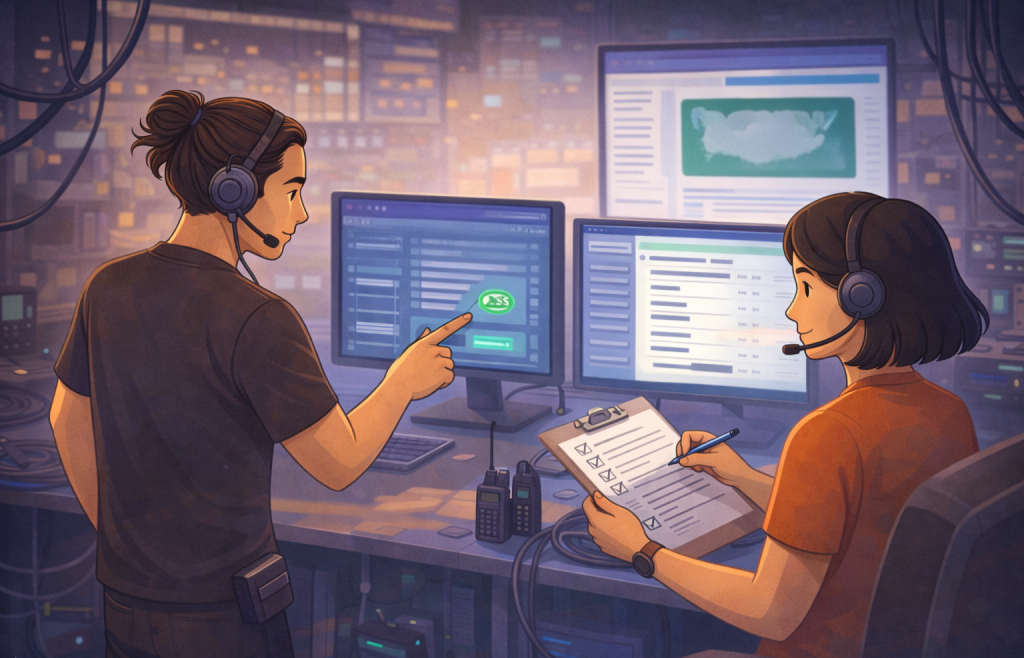
That judgment matters because many event issues have a tipping point. Before that point, you have options. After it, you have consequences.
Preparation Makes Fewer Problems Visible
The best-run events often look simple from the outside because the difficult decisions happened earlier.
Preparation does the heavy lifting when:
- check-in flows are tested before the doors open
- ticket types and capacity rules are configured clearly
- staff know exactly who escalates each type of issue
- event communication answers obvious questions before attendees ask them
- fallback plans are realistic instead of theoretical
When preparation works, attendees rarely see the problems that almost happened. That is not luck. That is operational design.
Event Operations Checklist: Challenge or Problem?
Use this quick checklist when something unexpected happens during planning, ticket sales, check-in, or the event itself.
- Is the issue growing in scale?
- Can attendees already see or feel it?
- Does it affect ticket sales, access, safety, timing, or trust?
- Will waiting make the fix harder?
- Is one team quietly compensating for a broken process?
- Are multiple people reporting the same confusion?
- Is there a clear owner for the next decision?
- Do you have a fallback plan that has actually been tested?
If several answers are yes, stop debating the label. Treat it as a problem and move.
Recommended Next Read
This topic connects directly to how event teams prepare for recurring issues and avoid repeating the same mistakes year after year.
- The myth of “we’ll fix it next year”
- Event managers – the method to the madness
- How to improve ticket check-in at the door
Final Thoughts
There is nothing wrong with calling something a challenge. The problem starts when the word delays action.
In live events, the difference between a challenge and a problem is not semantic. It is operational. It is about timing, visibility, escalation, and the cost of waiting too long.
If everything feels easy to attendees, it usually means someone behind the scenes made the hard call at the right time.
FAQ
What is the difference between a challenge and a problem in event planning?
A challenge can be managed without serious impact. A problem is likely to get worse, affect attendees, reduce options, or require immediate escalation.
Why do event teams avoid the word problem?
They often want to keep the team calm and solution-focused. That can help, but only if it does not hide urgency or delay action.
When should an event issue be escalated?
Escalate when the issue is growing, visible to attendees, affecting sales or access, reducing recovery options, or creating repeated confusion for staff.
How can event teams prevent small issues from becoming problems?
Test critical flows, define escalation owners, prepare fallback plans, communicate clearly, and review weak points before the event reaches peak pressure.