Few words in the event industry feel better than “sold out.”
It is the screenshot teams share internally, the line sponsors like seeing in recap decks, and the public signal that demand was strong. Selling out can validate your positioning, your promotion, your pricing, and the amount of work that went into getting people to say yes.
But after enough events, you start to notice something quieter behind the celebration. A sold out event is not only a success metric. It is also a pressure test.
It raises questions about pricing, capacity, operations, attendee comfort, team workload, and whether the model can be repeated without slowly wearing everyone down.
Quick answer
A sold out event is a strong signal, but it should not be the only definition of success. Organizers should also review whether pricing was optimal, whether capacity hurt the attendee experience, whether the team could handle the operational load, and whether the event can scale sustainably next time.
In this guide
- Why fast ticket sales deserve a second look
- How sold out events can hide pricing mistakes
- Why capacity is not the same as attendee experience
- What operational pressure looks like behind the scenes
- How growth creates risk when systems are not reinforced
- Which questions to ask before the next event cycle
Why “Sold Out” Feels Like the Ultimate Win
Selling out is worth celebrating. It means the market responded. It means your event page, campaign, offer, community, or brand had enough pull to fill the available capacity.
For smaller or newer organizers, it can be a major milestone. It builds confidence, creates social proof, and makes the next sponsor conversation easier. For established events, it reinforces the idea that the event still has demand and cultural relevance.
The problem starts when “sold out” becomes the final answer instead of the beginning of a review.
The headline tells you that all tickets were sold. It does not tell you whether the event was priced correctly, whether attendees were comfortable, whether staff were overloaded, or whether the operation can handle another increase next year.
Fast Sales Deserve a Second Look
When tickets disappear quickly, the natural reaction is excitement. But experienced organizers also ask a harder question:
Was demand truly that strong, or was the price lower than the market would comfortably accept?
There is a delicate balance between keeping an event accessible and undervaluing it. If you sell out far in advance every year, you may be leaving revenue on the table – revenue that could have supported production quality, staffing, marketing, accessibility improvements, or healthier margins.
That does not mean every sold out event should immediately raise prices. It means the result deserves analysis. Look at how quickly each ticket tier sold, how much demand remained after sellout, how many support requests asked about availability, and whether the final price matched the perceived value of the event.
A smarter event ticket pricing strategy does not chase the highest possible price. It tries to align demand, value, audience expectations, and financial sustainability.
Capacity Is Not the Same as Experience
Another common pattern appears after a successful year. If the event sold out at 800 attendees, the next question becomes whether it can fit 900.
Maybe the venue can technically hold them. Maybe fire regulations allow it. Maybe the seating chart can be expanded. But technically possible does not always mean operationally wise.
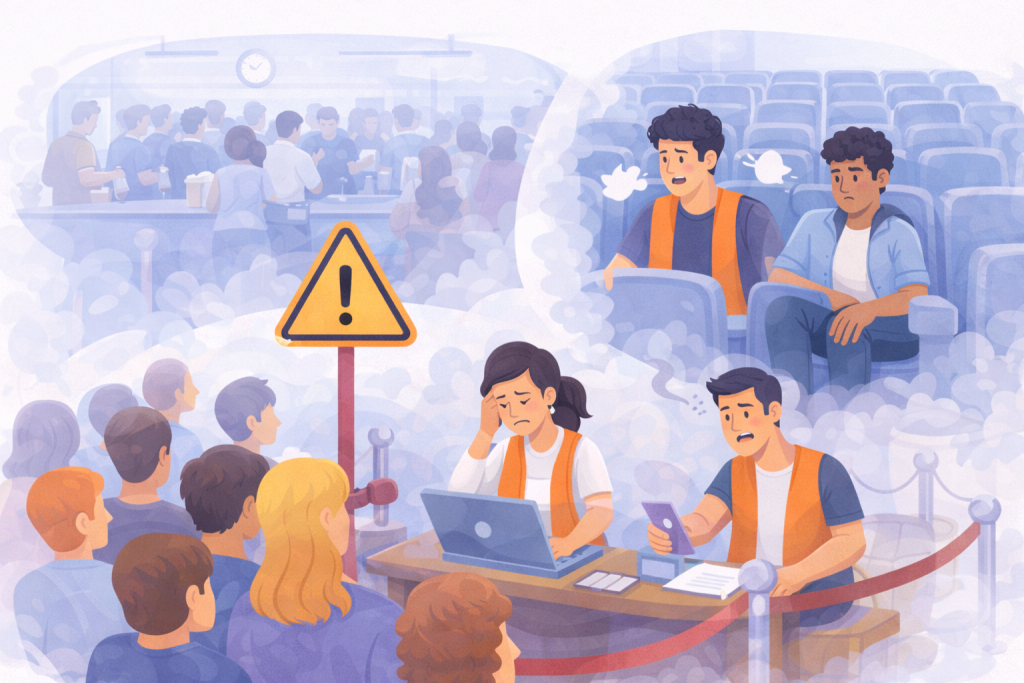
There is a point where extra capacity changes the feel of the event. Entry lines become longer. Check-in becomes more stressful. Seating feels tighter. Break areas get crowded. Staff have less room to recover between rushes.
From the outside, the event still looks like a success because every ticket was sold. Inside the venue, the experience may feel more strained than last year.
Attendees rarely remember capacity percentages. They remember whether the event felt smooth, comfortable, organized, and worth returning to.
The Operational Cost Nobody Posts About
A sold out event puts every system under maximum pressure.
- the website has to handle traffic spikes
- checkout has less room for friction
- support requests increase
- ticket changes and edge cases become more urgent
- check-in must move quickly
- staff have less margin for confusion
- small inefficiencies become visible faster
If the infrastructure was designed carefully, that pressure is absorbed by the system. If it was not, the team absorbs it instead.
That is where the silent cost appears. Repeatedly running at the edge of what people and systems can handle creates fatigue. It shows up in rushed decisions, lower morale, staff turnover, weaker follow-up, and subtle quality drops that are hard to connect to one specific cause.
None of that appears in the “sold out” announcement. But it affects whether the event can keep improving.
Growth Without Reinforcement Creates Fragility
Once an event sells out, it often creates a new internal benchmark. The next edition is expected to match it, and ideally exceed it.
That expectation can be motivating, but it can also introduce risk if the event grows faster than the systems supporting it.
- Attendance grows, but staffing stays the same.
- Marketing expands, but the website is not tested for higher traffic peaks.
- Ticket volume rises, but check-in procedures remain unchanged.
- Capacity increases, but communication and signage do not improve.
- More attendees create more support questions, but no one owns the process.
Growth itself is not the problem. Growth without reinforcement is.
Before adding more tickets, organizers should ask whether the ticketing setup, event page, payment flow, email communication, staffing plan, and check-in process can handle the next level. Stability at one size does not guarantee stability under higher load.
A Better Definition of Event Success
Selling out is one useful signal. It is not the whole scorecard.
A healthier definition of event success includes:
- strong ticket sales
- healthy margins
- clear buyer experience
- manageable support load
- smooth check-in
- comfortable attendee flow
- staff and vendor capacity
- repeat attendance
- the ability to run the event again without exhaustion

An event at 92% capacity with strong margins, calm operations, and an energized team may be healthier long term than one that sells every possible seat while barely covering rising costs and exhausting the people behind it.
That difference may not appear in a public headline, but it matters when the next event cycle begins.
Questions to Ask After a Sold Out Event
After the celebration, use the sellout as a review point. These questions will tell you more than the headline alone.
- How quickly did each ticket tier sell?
- Did the final price match the value attendees received?
- How much demand remained after sellout?
- Were support requests higher than expected?
- Did check-in remain smooth at peak arrival time?
- Were attendees comfortable inside the venue?
- Did staff have enough time, tools, and information?
- Which systems were close to their limit?
- What would break first if attendance increased by 10%?
- What should be improved before adding more capacity?
The goal is not to turn celebration into criticism. The goal is to make the next success easier to repeat.
How to Grow Without Breaking the Event
If your event sells out consistently, growth should be intentional rather than automatic.
- Use tiered pricing to understand demand earlier.
- Review ticket data before changing capacity.
- Improve the event landing page before increasing ad spend.
- Test checkout, email delivery, and check-in before peak traffic.
- Add staff or entry points before increasing attendance.
- Protect attendee comfort, not only ticket volume.
- Document operational lessons immediately after the event.
Sometimes the best growth decision is adding more tickets. Sometimes it is improving the experience, raising the value, and keeping capacity stable. The right answer depends on what your systems, team, and audience can support.
Recommended Next Read
If you are reviewing a sold out event, these guides can help you turn demand into a stronger next campaign.
- Event ticket pricing strategy
- How to sell more event tickets
- The “we’ll fix it next year” event planning mistake
Final Thoughts
Celebrate the sellout. It matters. It reflects demand, trust, and a lot of work done well.
Just do not let the applause drown out the better question: is this event model something you can repeat, strengthen, and scale without damaging the attendee experience or exhausting the team?
The strongest events are not only the ones that sell every ticket. They are the ones that can keep selling, improving, and returning stronger year after year.
FAQ
Is selling out always good for an event?
Selling out is usually a positive signal, but it should be reviewed alongside pricing, margins, attendee comfort, staff workload, and operational stability.
Does selling out mean ticket prices were too low?
Not always. Fast sales may show strong demand, but they can also indicate that pricing could be tested more strategically in future campaigns.
Should organizers increase capacity after a sold out event?
Only if the venue, staffing, check-in flow, communication, and attendee experience can support the increase. More tickets should not come at the cost of quality.
What should you review after a sold out event?
Review ticket tier performance, remaining demand, support volume, check-in speed, attendee comfort, staff workload, margins, and which systems were closest to their limit.