Roadmaps are useful. Changelogs are useful. Big announcements have their place too.
But if you want to understand what a product really needs next, support is often the better place to look. That is where real organizers show up with real deadlines, real confusion, real edge cases, and real pressure.
For Tickera, support is not just a place where questions get answered. It is one of the clearest signals we have for how event ticketing behaves outside our own assumptions.
So instead of starting the year with another feature list, it feels more honest to start here: inside Tickera support, and what those conversations continue to teach us.
Support Shows the Parts Analytics Miss
If you spend enough time answering support requests, patterns become visible that no analytics dashboard can fully explain.
You learn where users feel confident, where they hesitate, which concepts are not as obvious as we thought, and which questions only appear when someone is working under pressure.

Most people do not contact support when everything works. Silence usually means tickets are selling, check-in is running smoothly, and the event workflow is doing its job. That quiet success is exactly what we want, even if it does not produce visible feedback.
When people do write in, it often happens at pressure points: sales are about to open, the event is tomorrow, doors open in an hour, or someone changed a setting and needs to understand the consequences quickly.
Over time, those conversations stop looking like isolated issues. They become signals. They show where expectations and reality do not quite match yet.
What Progress Looked Like in 2025
In 2025, Tickera received 2,726 support tickets. Resolving those conversations took 4,481 individual responses from Tickera support agents.
Those numbers are not just workload. They are product feedback, documentation feedback, usability feedback, and real-world event operations feedback.
The same year, Tickera received 16 updates. Each of our 27 add-ons received at least one update as well. Across the ecosystem, that means 50+ releases, and in practice the total number of release-level changes was much closer to one hundred.
Behind those releases were hundreds of smaller changes. Some fixed edge cases uncovered through support. Some clarified behavior that caused confusion under pressure. Others improved compatibility, reliability, stability, or documentation.
This kind of progress is not always headline material. But when your software sits inside someone’s event workflow, steady improvement is often more valuable than dramatic change.
Repeated Questions Are Not Always a Failure
Some questions return again and again. Different users, different events, different levels of urgency – but the same underlying confusion.
It would be easy to say people did not read the documentation. Sometimes that is true. But often the reason is more human: ticketing sits at the intersection of payments, deadlines, staff, attendees, websites, emails, and pressure. Even well-designed systems need explanation when the stakes are high.
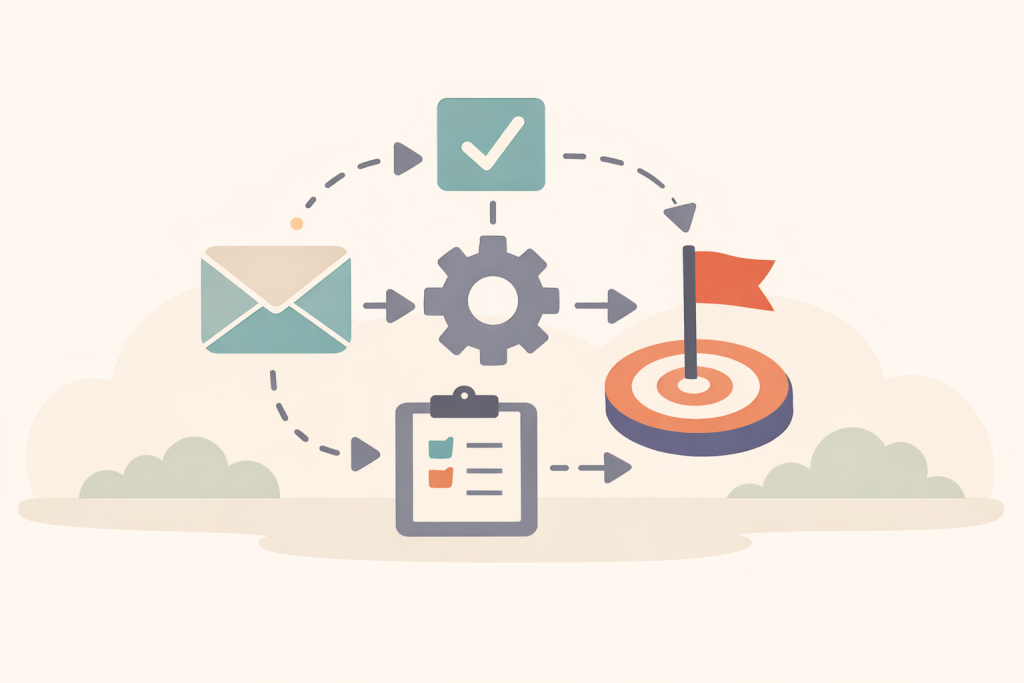
That is also where our AI assistant became genuinely useful in 2025. For repeated, well-documented questions, fast and accurate answers can make a real difference. Users get help sooner, and the support team can spend more time on complex cases where human judgment matters.
It is not perfect. It can miss the mark. When that happens, we step in and respond as clearly and quickly as we can.
Support has always been a balance between speed, accuracy, and empathy. AI did not replace that balance. It became one more part of it.
Documentation Is Product Work
Support conversations often answer the immediate question. The more important follow-up is: why did this need to be asked in the first place?
That question shaped a lot of our work in 2025. A large part of the year went into rewriting Tickera documentation from the ground up.

Documentation is often treated as something you finish once. In reality, it is a living part of the product. Features evolve, use cases expand, user assumptions change, and explanations that worked three years ago may no longer be enough.
When rewriting documentation, we tried to focus less on listing settings and more on explaining intent: why something works the way it does, when it should be used, and when it may not be the right tool.
That work is still ongoing. Some areas are still rough, especially the Solutions section, because real-world scenarios move quickly. New solutions appear, old ones change, and practical use cases keep expanding.
Still, the direction is clear: documentation should reduce pressure, not add to it.
Support Turns Customer Ideas Into Better Product Decisions
WordPress has always been strongest when people share what they learned instead of solving problems only for themselves. We want Tickera to keep moving in that spirit.
Toward the end of 2025, we invited users to share how they are using Tickera. What came back was not abstract feedback. It was real context from real event setups: creative workflows, limitations, edge cases, and detailed explanations of how organizers make Tickera fit their operation.

Some of those conversations are already shaping how we think about support, documentation, and product refinements. So thank you to everyone who took the time to write in. We heard you, and we took the details seriously.
If you land on a documentation page and something does not click, we want to know. Not only that it was confusing, but what you expected to find, what was missing, and how you eventually figured it out.
Those moments are valuable because they help the next organizer who lands on the same page under similar pressure.
What This Means for 2026
Starting the year with support feels right because support is where Tickera proves itself every day. Not only through responses, but through clearer documentation, better defaults, more reliable behavior, and the quiet moments where nobody needs to contact us because everything worked.
As we move through 2026, the goal is simple:
- keep refining the product
- explain important workflows more clearly
- use automation where it genuinely helps
- step in personally where judgment and context matter
- turn repeated questions into better documentation and product decisions
- listen closely to how organizers are actually using Tickera
That may not sound as dramatic as a big roadmap announcement. But for event organizers, calm and reliable usually matters more than dramatic.
Final Thoughts
Support is often seen as what happens after the product is built. For us, it is part of how the product keeps getting better.
Every question, repeated confusion, unusual setup, and detailed customer explanation teaches us something about the real conditions in which Tickera is used.
Here is to a calmer, clearer, better-supported year ahead – and to everyone who helps us make Tickera more useful by showing us how they actually use it.